
Both are focused on the overall transportation business, in which taxi services are only a part; the extended ambit includes autos, motorbikes, cycles, electric vehicles, water transport as well as food delivery services, says Surajeet Das Gupta.

The new Ola app will allow fleet owners to track their cars in real-time, view the performance of their drivers, and even their daily earnings
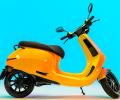
The entry of SoftBank-backed Ola into the electric scooter (e-scooter) segment is set to power up the overall market and perhaps fast-track the adoption of battery-operated vehicles. But for manufacturers of internal combustion engine (ICE)-powered two-wheelers, such as Bajaj Auto, Hero MotoCorp, and TVS Motor, it will be a double whammy. Not only will they have to contend with the aggressive pricing of Ola's scooter and incur a loss at each unit of the e-scooter sold, the volumes of their regular (ICE) models, too, could feel the squeeze, observed analysts. Ola is expected to price its e-scooter in the range of Rs 85,000-1.1 lakh.

The IPO market will be bustling next week, with four companies, including Bajaj Housing Finance, set to launch their initial share-sale to raise a total of Rs 8,390 crore. Besides these four main-board IPOs, nine SMEs are preparing to debut with their maiden public issues next week, targeting to collect Rs 254 crore. Together, these 13 firms are looking to raise Rs 8,644 crore through IPO.
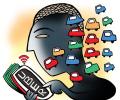
Uber has come up with a technology integration feature called "emergency assistance" that aims to provide public safety authorities with real-time actionable data in case of an emergency during a ride. In the event of an emergency, riders or drivers will be able to share their live location, which shall be updated every four seconds, along with their name and contact details at the swipe of a button on the Uber app with the police. This will lead to saving critical time by providing potentially life-saving assistance by the police.

Forest were good value for the win, though Ipswich came close to opening the scoring midway through the first half.

The Bengaluru-based firm competes with US rival Uber whose lukewarm IPO last year has contributed to the lag in valuation trend among the unicorns across the Indian start-up ecosystem.

Ola wants to be India's answer to Grab, which is into everything, starting from cab service and logistics to bike taxis and food and grocery delivery.
Cab aggregator Ola is laying off 1,400 staff from rides, financial services and food business as revenues declined by 95 per cent in the last two months due to coronavirus pandemic, a note by CEO Bhavish Aggarwal said. In an email to employees, Aggarwal made it clear that the prognosis ahead for the business is "very unclear and uncertain" and the impact of this crisis is "definitely going to be long-drawn for us".

Around half the value of the mark-downs is due to the Japanese currency's appreciation against other currencies.
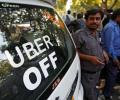
Uber on Tuesday said it is laying off about 600 employees in India -- about a quarter of its staff in the country -- as business has taken a major hit amid the COVID-19 pandemic. The development comes days after rival Ola had announced laying off 1,400 people from its rides, financial services and food business.

The news of markdowns in the value of Ola and Snapdeal comes at a time when both companies are in talks with investors to raise fresh funds to take on deep-pocketed competition.

The total number of demat accounts in the country stood at 171.1 million as of August 31.

A group comprising top tech startups and unicorns has raised several "serious concerns" over a platform-based gig workers Bill proposed by the Karnataka government, saying it would hurt the ease of doing business. They told the state government the Bill in its current form would hamper operations and increase regulatory and compliance burden on the nascent gig and startup economy, according to sources.

The firm is fighting a court battle over new rules that mandate licensing & cap fares that remove surge pricing.

Both Indian firms have been in talks with investors for nearly a year to raise fresh funds of as much as $ 1 billion, but with little success so far.

Bajaj Auto has virtually closed the gap with Ather Energy in September, notching up 6423 EV registrations compared to 6466 registrations by Ather.

Uber started its business three years ago in India and is now operating in over 20 cities with thousands of cab drivers.

There are times when a customer books a cab and is charged for the ride, but the driver doesn't show up. It is one of the many hacks that cab drivers use.

The Ludhiana-born engineer is among the youngest entrepreneurs on TIME's 100 most influential people.

With an existing consumer base of 400 million across airports, electricity and gas distribution businesses, the Adani group is revving up its retail play. It is planning to use the 2.4 billion consumer interactions a year with group companies to push various products and services. The group has already launched the 'Adani One' super app that will eventually sell products across the spectrum, top executives said.

Anupam Mittal, the fund man behind OlaCabs has lined up more investments.

Uber is suing Ola for $7.5 million to compensate for lost revenue and goodwill, alleging the Indian market leader created about 94,000 fake user accounts with the ride-hailing service and used them to make more than 405,000 false bookings

The competition between app-based taxi services has led to a drop in prices and more choices for customers.

If the alliance works out as planned, it will give a big boost to Mahindra, as it has been struggling with its only car model Verito, managing to sell around 200 units a month

The controversy started a Twitter firestorm with many demanded the Ola to block his account. However, there were many who supported the man's 'right to choose'.

The poor attitude of the rickshaw and taxi drivers is a major reason why Ola and Uber are easily breaking into markets like Mumbai.
State govt asks the two taxi aggregators to end surge pricing.

Just a few weeks ago, the Centre has come out with the long-awaited Motor Vehicle Aggregator Guidelines, which have drawn a dismayed response from the companies concerned.

Can Bhavish Aggarwal upend the electric two-wheeler market, which is now overwhelmingly in favour of scooters?
The new four-wheeler (4W) electric vehicle (EV) policy may spur the entry of global majors. The manufacturing policy cuts Customs duty to 15 per cent, given a minimum investment commitment. It calls for a minimum investment of Rs 4,150 crore (about $500 million) for making electric four wheelers (e-4Ws), with manufacturing to commence within three years of approval.

Even though electric two wheeler (e2W) companies saw a slight recovery in July of 12 per cent with 49,518 registrations - after a wash out in June because the government slashed the FAME 2 subsidy by a third - registrations are still lower for the second month in a row compared to April FY24. The slow pace has raised doubts about whether the registrations will reach anywhere near either Niti Aayog's ambitious target of 2.4 million vehicles in FY24 or whether they will be closer to the trimmed down industry expectation of around one million. In June, e2W registrations plunged to a mere 44,253, the worst month in more than a year, as companies hiked scooter prices.
.jpg)
After stepping out of the cab near South East Delhi's C R Park area, she informed the police about the incident at around 10 pm, the police said.

I am happy I didn't knock anyone down, driving recklessly or trying to show off. However, in one instance of road rage (the consequence of arguing with a driver who disrespected my right to cross the road peacefully) I did find a man in a SUV taking his anger out on me by driving his vehicle over my feet, recalls Shyam G Menon.

Vogo, which has a fleet of over 12,000 vehicles mainly across Hyderabad, Mysuru and Bengaluru, is also betting big on India's growing traffic congestion.

'Our expectations are that we will be able to double our market share from 14-15 per cent currently to around 30 per cent by the end of the financial year.'

Of the 15 car manufacturing companies in India, eight have a market share of below 2 per cent, raising questions about their long-term future in a competitive market that has already seen Ford Motors and General Motors slam the door on India.

Food delivery major Swiggy has received approval from its shareholders for a $1.25 billion initial public offering (IPO), according to filings made with the Registrar of Companies sourced by Tofler. The Bengaluru-based firm plans to raise as much as Rs 3,750 crore (around $450 million) via a fresh issue and up to Rs 6,664 crore (around $800 million) through an offer-for-sale (OFS) component, the filings stated.

Stung by the government's punitive action on electric two-wheelers, registrations in April fell by nearly a fourth to 62,581 from 82,292 in March, according to data from VAHAN. Electric two-wheeler companies, including Okinawa, Hero Electric, Ather Energy, and TVS, have all clocked their lowest registrations in the four months of this calendar year. Ola Electric has been the only exception to this bloodbath, and has crossed its March numbers, hitting 21,560 registrations in April, which is its highest in this calendar year. As a result, there have been some interesting changes in the electric two-wheeler pecking order.

Bajaj Auto's market capitalisation (market cap) hit Rs 2 trillion mark for the first time. The stock of the two and three-wheeler major rallied 6 per cent to hit a new high of Rs 7,420 on the BSE in Tuesday's (January 9) intraday trade after its board approved Rs 4,000 crore share buyback at Rs 10,000 per share. The stock ended the day at Rs 7,093.75, up 1.55 per cent and its market cap a shade above Rs 2 trillion.
 © 2026 Rediff.com - Advertise with us - Disclaimer - Privacy Policy - Sitemap - Feedback - About us - Terms of use - Grievances